
How to Conquer Prejudice the Jesus Way John 4:3–9
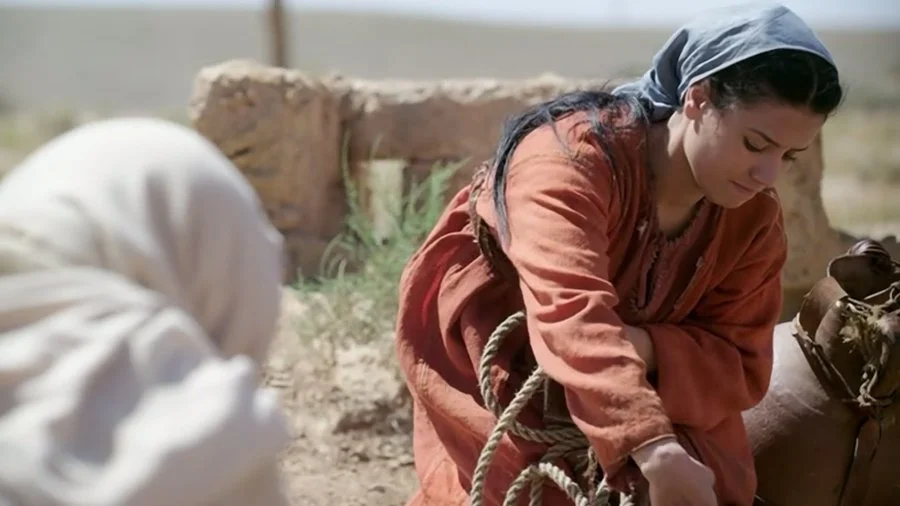
Prejudice has damaged humanity in ways that may never be fully revealed until judgment day. Even history shows how bias and exclusion have driven people away from the gospel, sometimes with eternal consequences. In this Light on Life teaching, we examine how Jesus confronted prejudice head-on through His encounter with the Samaritan woman at the well. By crossing cultural, racial, religious, and moral barriers, Jesus modeled God’s heart for all people. How to Conquer Prejudice the Jesus Way is our focus on this week’s Light on Life.
This Week: How Jesus confronted prejudice, crossed barriers, and showed us God’s heart for all people.
Listen to the Audio
#S6-014
Right Click to Download
Never Miss an Episode
Join believers who are growing in God’s Word every week. Subscribe to the Light on Life Podcast on your favorite platform:
Use this if your podcast app supports adding shows by RSS feed.
Read the Notes
You can view a 'no frills' transcript of this podcast at the bottom of this section.
Accept the Challenge
Each week's podcast contains a call to action. The Word of God will not produce in your life unless you put into operation. This weeks Call to Action is:
Strive to become a believer in Jesus who understands what happened inside of them when they first said yes to Jesus. Out of the life of God that is in you, reach out and touch someone.
Join the Conversation
Each week's podcast also contains a question designed to encourage testimony. Testimony is vital to a believers life. We overcome by it (Rev. 12:11).This week's question is:
How have you shared the message of Jesus Christ and the born again experience with other people? Please leave your story in the comments section below.
About Emery
Emery committed his life to the Lord Jesus Christ over 42 years ago. He has served as both a full-time pastor and an itinerant minister. Both he and his wife Sharon of 38 years emphasize personal growth and development through the Word of God. The ministry of the Holy Spirit is both the focus and the hallmark of their mission. Read more about them here.
If this episode on total trust and abiding in Jesus encouraged you, would you share it with a friend or leave a quick review?
Podcast Notes:
Jesus Encounters the Samaritans
John 4:3–9 (ESV) — 3 he left Judea and departed again for Galilee. 4 And he had to pass through Samaria. 5 So he came to a town of Samaria called Sychar, near the field that Jacob had given to his son Joseph. 6 Jacob’s well was there; so Jesus, wearied as he was from his journey, was sitting beside the well. It was about the sixth hour. 7 A woman from Samaria came to draw water. Jesus said to her, “Give me a drink.” 8 (For his disciples had gone away into the city to buy food.) 9 The Samaritan woman said to him, “How is it that you, a Jew, ask for a drink from me, a woman of Samaria?” (For Jews have no dealings with Samaritans.)
Jews have no dealings with Samaritans, did you hear that?
That is the face of prejudice and isolation is just one-way prejudice responds.
What Is Prejudice?
Racism is prejudice, discrimination, or antagonism directed against someone of a different race based on the belief that one’s race is superior.
That’s the definition of racism from an English dictionary.
It’s a definition based on the natural realm.
Spiritually racism looks a bit different.
Spiritually, racism is a demonic spirit of division whose aim is to magnify the God created differences between people.
It is hatred.
And, it is in the Bible.
Now, note the phrase, ‘Jesus had to pass through Samaria’ from verse four.
According to the gospel writer, Jesus had to do it.
The word in Greek for ‘had’ here means to be necessary or to be unavoidably determined by prior circumstances; sometimes understood with contingency.
This question of ‘had to go to Samaria’ sets up now some dynamics that give us some insight into who Jesus is and how God thinks about prejudice.
So, let’s set the table for what’s going on here.
We have to ask the question “why was it necessary for Jesus to through Samaria?”
Prejudice between Jews and Samaritans
Part of the answer has to do with the incredibly negative history between Jews and Samaritans.
To say that these two groups did not like one another would be a mild way of putting it.
There’s probably not enough words for it.
Bad blood, like ‘Hatfield’s and McCoys kind of bad blood,’ simmered between these two groups.
Most self-respecting Jews would go out of their way to have nothing to do with Samaritans.
Do remember the episode where Jesus tried to enter a Samaritan village?
Luke 9:51–56 (NKJV) — 51 Now it came to pass, when the time had come for Him to be received up, that He steadfastly set His face to go to Jerusalem, 52 and sent messengers before His face. And as they went, they entered a village of the Samaritans, to prepare for Him. 53 But they did not receive Him, because His face was set for the journey to Jerusalem. 54 And when His disciples James and John saw this, they said, “Lord, do You want us to command fire to come down from heaven and consume them, just as Elijah did?” 55 But He turned and rebuked them, and said, “You do not know what manner of spirit you are of. 56 For the Son of Man did not come to destroy men’s lives but to save them.” And they went to another village.
Did you hear that ‘they went to another village?’
Many Jews would make an end around Samaria rather than travel through it.
Social prejudice didn’t deter Jesus for one second.
Jesus Was Spirit Led
The Father God directed His steps.
Psalm 37:23 (NKJV) — 23 The steps of a good man are ordered by the LORD, And He delights in his way.
You can expect the same thing in your life.
Jesus had to go through Samaria.
Could it be that the Spirit of God compelled Him to go to Samaria because he had a divine appointment with a certain woman at a certain well?
Was this woman lined up to experience a God-ordained divine appointment?
To further understand what’s happening in this famous ‘woman at the well’ story we need to get into some history.
With these thoughts here’s the historical background of the day.
Samaria: Historical Background
Samaria was dead center between Galilee to the north and Judea to the south.
If you wanted to go to Jerusalem from Galilee, the fastest route was directly through Samaritan country.
Using this direct route, this journey would take approximately three days.
The alternative route for a Jew, with ill will in his heart toward Samaritans, was to cross the Jordan, go up the eastern side of the river thus avoiding Samaria, and recrossing the Jordan north of Samaria and on into Galilee.
This route was twice as long.[2. William Barclay, The Gospel of John, Rev. and updated., vol. 1, The New Daily Study Bible (Edinburgh: Saint Andrew Press, 2001), 171.]
Jesus doesn’t take the ‘prejudicial route’.
He doesn’t take the avoidance route.
He takes the direct route.
So, let’s take a look at this historical thing a little further at the source of the hatred which existed between Samaritan and Jew.
How Some of the Jews Became Samaritans
Samaria had a long history, by the days of Jesus.
Omri, king of the ten northern tribes, built his new capital and called it Samaria.
That’s how it came into existence.
You remember that because of Israel’s sin, God split Israel into two groups composed of the Northern Kingdom of Israel and the Southern Kingdom of Judea during the days of Rehoboam, Solomon’s son.
After the split, the northern kingdom of Israel experienced political instability and civil war until King Omri established a powerful dynasty at the beginning of the ninth century BC. He and his successors—Ahab, Ahaziah, and Jehoram (Joram)—ruled for nearly 40 years and made the northern kingdom a prosperous and powerful nation. [3. Benjamin J. Noonan, “Omri, King of Israel,” ed. John D. Barry et al., The Lexham Bible Dictionary (Bellingham, WA: Lexham Press, 2016).]
You find that in 1 Kings 16:24.
1 Kings 16:24 (ESV) — 24 He bought the hill of Samaria from Shemer for two talents of silver, and he fortified the hill and called the name of the city that he built Samaria, after the name of Shemer, the owner of the hill.
Omri: Founder of Samaria
So, Omri built this city called Samaria.
The name spread out to eventually include the entire region around the city as well, and before long the name was linked to the whole northern kingdom.
Now, again, if you look at a map, this region of the Promised that God gave to Israel under Joshua is dead center of Israel.
So, if you want to go from the north of Israel to the south of Israel, you have to pass through this region of Samaria.
Or putting it another way, if you were Peter, a Galilean fisherman, and you wanted to go down south to Jerusalem to celebrate Passover, the shortest route took you through Samaria.
Now, some more history here.
When the Assyrians captured the northern kingdom, the northern ten tribes, in 721 B.C., they deported the more gifted and wealthier Israelites and imported foreign pagans and settled them in the old kingdom of Israel.
These foreigners brought with them their pagan gods and intermarried with the Israelites left in the land.
That’s how these Israelites lost their pure genealogy.
Thus, “Samaritan,” came to mean a half-breed Israelite whose religion lacked features of a purer Judaism[4. Beauford H. Bryant and Mark S. Krause, John, The College Press NIV Commentary (Joplin, MO: College Press Pub. Co., 1998), Jn 4:4.]
So, Samaritans, are Jews.
Their location is part of the Promised Land sitting right in the middle of the land of Israel.
But because of their lack of pure blood, they became a heinous bunch to genealogical and purity minded Jews.
To show you how far prejudice ran, in a strict Jewish household even to this day, if a son or a daughter marries a Gentile, his or her funeral service is carried out.
Such a person is dead in the eyes of orthodox Judaism.[5. William Barclay, The Gospel of John, Rev. and updated., vol. 1, The New Daily Study Bible (Edinburgh: Saint Andrew Press, 2001), 173–175.]
So, because of mixed blood, there’s this high level of racial and religious tension which developed between Samaritans and Jews.
That didn’t deter Jesus as you can see from our primary text.
He has to go right through the middle of Samaria.
Why the Samaritans Came to Build Their Own Temple?
Now, let’s go ahead and talk about the Temple.
Herod’s Temple was in Jerusalem.
That’s where you see Jesus and the disciples head on many occasions.
But, the Jews of Samaria built their version of the Temple so they wouldn’t have to have anything to do with the pure Jews of Jerusalem.
Again, it’s this isolationism piece that’s a characteristic of prejudice.
The Jewish historian Josephus gives us the account of the Temple the Samaritans built.
They built their version on a mountain called Gerizim, or Mount Gerizim.
It was built during the time of Nehemiah.
Now, you remember the story of Nehemiah rebuilding the wall of Jerusalem.
Samaritans were involved in that story.
That didn’t turn out well.
Nehemiah 13:28 (ESV) — 28 And one of the sons of Jehoiada, the son of Eliashib the high priest, was the son-in-law of Sanballat the Horonite. Therefore I chased him from me.
They chased old Sanballat the Horonite away.
Sanballat was a Samaritan who led the Samaritan opposition to the rebuilding of Jerusalem walls.
Nehemiah 2:10 (ESV) — 10 But when Sanballat the Horonite and Tobiah the Ammonite servant heard this, it displeased them greatly that someone had come to seek the welfare of the people of Israel.
When Sanballat and the Samaritans were rejected from having anything to do with rebuilding the wall or the city of Jerusalem, they set out on their own to build their version of the Temple.
More Bad Blood between Jews and Samaritans
Now fast forward to the year 129 BC.
We are now in the Inter-Testament period during the Maccabaean days.
John Hyrcanus, the Jewish general, and leader led an attack against Samaria and sacked and destroyed the Temple on Mount Gerizim.
So you can see these people did not like each other.
Between Jews and Samaritans, there was an embittered hatred.
The Jewish Rabbis said: ‘Let no man eat of the bread of the Samaritans, for he who eats their bread is as he who eats swine’s flesh.’
One of the Apocrypha books Ecclesiasticus depicts God as saying: ‘Two nations my soul detests, and the third is not even a people: those who live [on the mountain of Samaria], and the Philistines, and those foolish people that live in Shechem’ (Ecclesiasticus 50:25–6).
Shechem was one of the most famous of Samaritan cities.
Rabbi Jochanan was passing through Samaria on his way to Jerusalem to pray. As he went by by Mount Gerizima, a Samaritan saw him, and asked him: ‘Where are you going?’ ‘I am going to Jerusalem,’ he said, ‘to pray.’ The Samaritan answered: ‘Would it not be better for you to pray in this holy mountain [Mount Gerizim] than in that accursed house?’
Pilgrims from Galilee to Jerusalem had to pass through Samaria, if, as we have seen, they traveled by the quickest way; and the Samaritans delighted in hindering them.
It was small wonder that the Samaritan woman was astonished that Jesus, a Jew, should speak to her, a Samaritan.[6. William Barclay, The Gospel of John, Rev. and updated., vol. 1, The New Daily Study Bible (Edinburgh: Saint Andrew Press, 2001), 173–175.]
Now you have some backdrop to this story.
Surely Jesus was aware of these natural facts between these people.
But, it could be that the Spirit of God bade Him go?
The answer to that is absolutely yes.
And, could it also be that’s the reason the Spirit of God moved on John to include this story in his gospel?
Again, you could answer this in the affirmative.
Billy Graham and Prejudice
Could it be that this was written for the admonition of the believers in Jesus everywhere so that we might know that in Jesus Christ there’s no difference?
Galatians 3:26–29 (ESV) — 26 for in Christ Jesus you are all sons of God, through faith. 27 For as many of you as were baptized into Christ have put on Christ. 28 There is neither Jew nor Greek, there is neither slave nor free, there is no male and female, for you are all one in Christ Jesus. 29 And if you are Christ’s, then you are Abraham’s offspring, heirs according to promise.
There is something Billy Graham said along this line of racial divide.
“I am not here to tell you about an American or a Britisher or a European,” I said everywhere we went. “I am here to tell you about a Man who was born right here in your part of the world, in Asia. He was born at the place where Asia and Africa and Europe meet. Jesus had skin that was darker than mine, and He came to show us that God loves all people. He loves the people of India, and He loves you.” We could see people’s eyes light up as they realized that Chris-tianity was not exclusively for Europeans or the white race but that Christ came for all.
Jesus came for everyone.
He died for everyone, both Jew and Gentile.
So here is this woman.
John 4:7 (ESV) — 7 A woman from Samaria came to draw water. Jesus said to her, “Give me a drink.”
Nicodemus Versus The Women at the Well
How different this personal encounter is then the one in the previous chapter with Nicodemus.
Nicodemus had a pedigree.
He was the preeminent teacher in Israel.
Old Nick, who came to Jesus by night, was a Pharisee.
He was a ruler in Israel, a supposed holy example for the Jews to follow.
This woman of Samaria had no such credentials.
She was just a normal Jewish lady with mixed blood.
The stark difference is evident, yet Jesus flows seamlessly between these two people.
Prejudice and the Women at the Well
There were several society strikes against this woman.
First, she was a Samaritan.
That’s bad all bad itself from the standpoint of the Jews.
Second, she was a lady, a woman, a female.
So, she had that against her.
Third, she had a past, a very sinful past.
She had five husbands.
Maybe that’s why she was all alone coming to draw water?
Women in that day gathered to do water-drawing tasks as a group for safety.
Some have speculated that this woman Jesus encountered was alone because of her lifestyle; either shunned by others or embarrassed and unwilling to be around people.
Either way, this woman at the well was an isolated soul.
Here’s the point, Jesus had to go to see this woman.
Jesus pressed through all of the social prejudices of that day because He knew what manner of Spirit He was of.
And, you should know it too.
Forget this isolationism mess.
How many of you right now are experiencing separation from a family member because of some kind of prejudice?
Maybe you have distanced yourself; perhaps you've taken the long way of avoidance to get around even seeing these people.
Here’s the example of Jesus to you today, press right through the mess of prejudice and come together with one another.
You can do it.
You have the love of God in you and the life of God in your nature.
Take the direct route and reach out and touch somebody.
🎧 Suggested Episode
If you found this teaching on how Jesus confronts prejudice and brings reconciliation helpful, check out “Why You Can Absolutely Expect Powerful Healing Moves of God” — it explores how the compassion of Christ releases healing and restoration in lives today.
Listen Now →