
How Can This 'Jesus Sign' Fulfill Your Life John 20:30–31
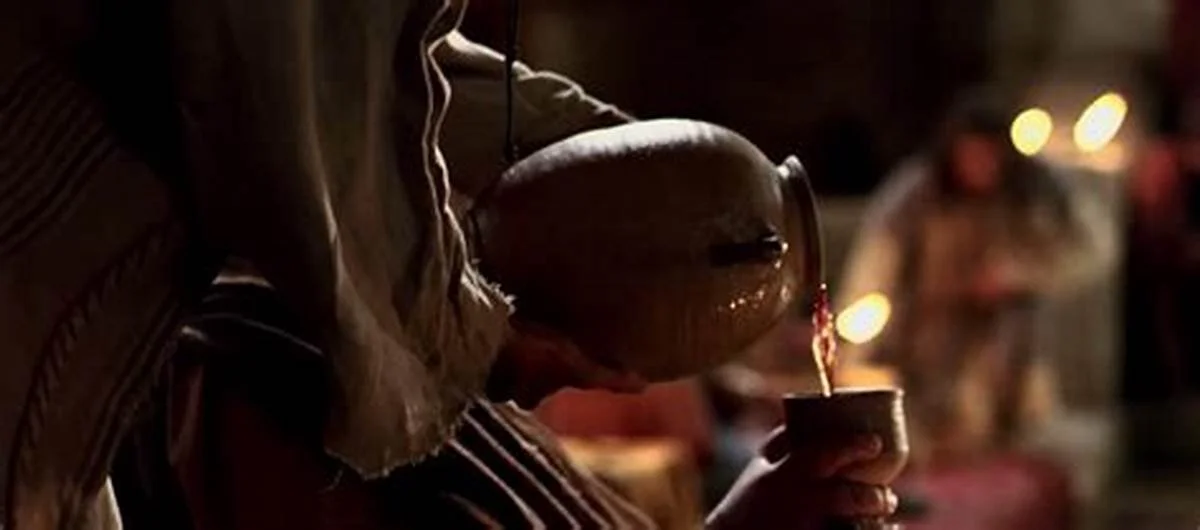
Throughout Scripture, signs serve as pointers — indicators that something greater lies ahead. Just as floating chaff once signaled abundance to a starving people, the miracles of Jesus point unmistakably to His identity and His mission to save humanity. In John’s Gospel, these signs were recorded so that we might believe that Jesus is the Christ and, by believing, have life in His name. In this episode, we examine the very first of Jesus’ signs — the turning of water into wine — and uncover what it reveals about His completeness, compassion, and willingness to work in everyday moments. How Can This “Jesus Sign” Fulfill Your Life, that’s our focus on this week’s Light on Life.
This Week: Discover how Jesus’ first sign points you toward belief — and why recognizing it can anchor your confidence in Him.
Listen to the Audio
Never Miss an Episode
Join believers who are growing in God’s Word every week. Subscribe to the Light on Life Podcast on your favorite platform:
Use this if your podcast app supports adding shows by RSS feed.
#S6-001
Right Click to Download
Read the Notes
You can view a 'no frills' transcript of this podcast at the bottom of this section.
Accept the Challenge
Each week's podcast contains a call to action. The Word of God will not produce in your life unless you put into operation. This weeks Call to Action is:
Follow the Sign. Trust the Savior.
This week, refuse to overlook the signs that point you toward Jesus and stir your belief in Him.
Just as floating chaff signaled abundance ahead, the signs of Jesus remind you that help, direction, and life are found in Him. Train your heart to recognize His work not only in extraordinary moments but also in the everyday rhythms of life. Expect Him to move, trust His completeness, and let every sign deepen your confidence in who He is.
The signs point to a perfect Savior — follow them and anchor your life in Him.
Scripture: John 20:30–31 (ESV) —
“Now Jesus did many other signs in the presence of the disciples, which are not written in this book; but these are written so that you may believe that Jesus is the Christ, the Son of God, and that by believing you may have life in his name.”
Join the Conversation
Each week's podcast also contains a question designed to encourage testimony. Testimony is vital to a believers life. We overcome by it (Rev. 12:11).This week's question is:
Question:
Where might Jesus be pointing you to trust Him more — in an everyday situation you may have overlooked?
Share:
Ask the Lord to open your eyes this week to recognize His activity in your life, and take one step of faith in response.
Remember:
The signs of Jesus are never random — they are invitations to believe and experience the life only He can give.
If this episode on total trust and abiding in Jesus encouraged you, would you share it with a friend or leave a quick review?
Podcast Notes:
The Reason for Recording Signs
John 2:3–11 (ESV) — 1 On the third day there was a wedding at Cana in Galilee, and the mother of Jesus was there. 2 Jesus also was invited to the wedding with his disciples. 3 When the wine ran out, the mother of Jesus said to him, “They have no wine.” 4 And Jesus said to her, “Woman, what does this have to do with me? My hour has not yet come.” 5 His mother said to the servants, “Do whatever he tells you.” 6 Now there were six stone water jars there for the Jewish rites of purification, each holding twenty or thirty gallons. 7 Jesus said to the servants, “Fill the jars with water.” And they filled them up to the brim. 8 And he said to them, “Now draw some out and take it to the master of the feast.” So they took it.9 When the master of the feast tasted the water now become wine, and did not know where it came from (though the servants who had drawn the water knew), the master of the feast called the bridegroom 10 and said to him, “Everyone serves the good wine first, and when people have drunk freely, then the poor wine. But you have kept the good wine until now.” 11 This, the first of his signs, Jesus did at Cana in Galilee, and manifested his glory. And his disciples believed in him.
The First Sign: Water into Wine
So, this was the very first sign that Jesus performed, turning ordinary everyday H2O into robust deep bodied wine.
In a previous podcast, we quoted from John chapter twenty, a portion on Jesus sign ministry.
John 20:30–31 (ESV) — 30 Now Jesus did many other signs in the presence of the disciples, which are not written in this book; 31 but these are written so that you may believe that Jesus is the Christ, the Son of God, and that by believing you may have life in his name.
So, John recorded some of the signs that Jesus did for one reason and one reason only.
So that, people might believe Jesus is who he said was the Savior of the world, the Forgiver of all of man’s sin, the Divine Substitute for both you and I.
The by-product of this effort on John’s part was so that all who read these miracles might believe in Jesus and enjoy the eternal life that only comes by believing in Jesus.
That’s why he wrote these signs down, and here in chapter two, we have the first one.
Chronological Markers: God’s Perfect Sign
So, let’s drill down into the facts of this sign and let’s stir up belief in Jesus.
Notice, the first couple of words, ‘On the third day…’
Now, if you read chapter one, you will notice some chronological ‘day’ markers.
Look at verse twenty-nine.
The Next Day
John 1:29 (ESV) — 29 The next day he saw Jesus coming toward him, and said, “Behold, the Lamb of God, who takes away the sin of the world!
‘The next day’ means that what happened before verse twenty-nine was the previous day.
And, if you go back and read that, you will find John the Baptist witnessing that he was not the Messiah.
The religious leaders were curious about that, that was in the last podcast we recorded.
So, now we have the next day starting in verse twenty-nine, and that’s where John the Baptist personally points out Jesus as the Lamb of God, God’s sacrifice for sin for man.
That takes us to verse thirty-five of John chapter one where we have another chronological ‘day’ marker.
Another 'Next Day'
John 1:35–36 (ESV) — 35 The next day again John was standing with two of his disciples, 36 and he looked at Jesus as he walked by and said, “Behold, the Lamb of God!”
John points out Jesus a second time as the Lamb of God to his disciples; you know people who were following John’s ministry.
They leave John’s ministry, and they follow Jesus instead.
That’s a good thing; you want people following Jesus not following you.
So, now that’s three days worth of markers.
There is one more in John chapter one.
That’s at verse forty-three.
Yet Another 'Next Day'
John 1:43 (ESV) — 43 The next day Jesus decided to go to Galilee. He found Philip and said to him, “Follow me.”
Jesus finds Phillip.
Phillip finds Nathanael, and we have now a few more people following Jesus.
So now, that’s four consecutive days chronicled in chapter one.
Now we come to chapter two verse one which is what we read already: ‘On, the third day.’
So you have the four days of chapter one and the three days of this first verse in chapter two, that’s seven days altogether.
So, the first sign that Jesus did to help people believe in God took place on the seventh day of His ministry.
Now, what is significant about that?
The Significance of the Number Seven in Scripture
There is deep meaning attached to the number seven in the Bible.
Seven symbolically means completeness or perfection.
For example, God created the earth in six days and on the seventh day He rested.
The number seven relates to God’s perfect foresight.
Zechariah 4:10 (ESV) — 10 For whoever has despised the day of small things shall rejoice, and shall see the plumb line in the hand of Zerubbabel. “These seven are the eyes of the LORD, which range through the whole earth.”
I don’t believe this means He was seven eyeballs.
I believe it means that He sees and knows everything.
How about this verse in the book of Revelation?
Seven Holy Spirits
Revelation 5:6 (ESV) — 6 And between the throne and the four living creatures and among the elders I saw a Lamb standing, as though it had been slain, with seven horns and with seven eyes, which are the seven spirits of God sent out into all the earth.
Again, this doesn’t mean that there are seven Holy Spirits.
The number seven here refers to the fullness of God’s Spirit.
There seven churches in the book of Revelation.
And, seven days to the Passover, Exodus 12:15.
Pharoah’s dream to which Joseph gave the interpretation had seven well-fed cows, seven anorexic cows, seven full ears of corn and seven shriveled up withered ears of corn.
The interpretation of that dream was seven years of plenty followed by seven years of famine.
There’s a lot of sevens in that story.
What about Jericho?
Didn’t Israelites march seven days around the walls of that city?
Listen to the verse.
Seven Priests, Seven Trumpets, Seven Days, Seven Times
Joshua 6:4 (ESV) — 4 Seven priests shall bear seven trumpets of rams’ horns before the ark. On the seventh day you shall march around the city seven times, and the priests shall blow the trumpets.
Seven priests, seven trumpets, seven days of marching, and then, God works a complete deliverance for the entire nation of Israel.
Come on now; you can see that the number seven has meaning.
Now, not in every place in scripture is the number symbolically significant.
In some places, the number means the number.
For example, Jacob served seven years for both Leah and Rachel.
The number there I think only means seven years.
There’s nothing symbolic there.
The Seven Signs of John’s Gospel
So, the first sign Jesus did took place on the seventh day.
How do we know this is significant?
Well, one fact which gives us a clue is that there were seven total signs recorded by a Holy Spirit led John in his gospel.
Here they are:
The changing of water into wine at Cana of Galilee, John 2:1–11.
The healing the nobleman's son in Capernaum while at Cana of Galilee, John 4:46–54
The healing of the man paralyzed for thirty-eight years, in John 5:1–15
The feeding of the 5000, John 6:5–14.
Jesus walking on water, John 6:16–24
The healing of the man born blind, John 9:1–7
The resurrection from the dead Lazarus, John 11:1–45
So, think about it.
The First Jesus Sign Is on the Seventh Day
There are seven signs and the first one John records happens on the seventh day.
It isn't a coincidence.
There is some deep meaning here.
John said, and we already looked at it, that there many signs that Jesus did which couldn’t fill all of the books in all the libraries of the world.
Why did He pick just seven, if there was so many to choose?
Jesus could have picked eight?
What about ten?
That’s a good even OCD number.
He could have picked thirty-seven.
But he didn’t, why didn’t He?
He chose seven.
The turning of the water into wine is one of the seven signs John selected and none of the other gospels, Matthew, Mark or Luke, record this miracle.
John is the only one.
So, John, for his gospel picks a sign no one else uses, and that one sign just happens to fall on the seventh day.
Oh, come on man, you have to see that it has great depth of meaning here.
The signs of Jesus are perfect.
More than perfect, they are 'all kinds' of complete.
They are total representations for Jesus.
And, since they do, you can have perfect and complete confidence in Him today because he is an excellent and complete Jesus.
He is a perfect and complete Savior.
That’s good preaching right there.
Water to Wine ‘Sign Lesson’ One: Jesus First Sign Is at a Social Gathering Not a Spiritual Meeting
Now’ let’s go over this sign and see what we can learn about it and about how Jesus lived life day to day.
Jesus wasn’t in ministry mode like He was when He when to the synagogue or when He borrowed Peter’s boat to teach the multitudes.
He was at an everyday ordinary Jewish wedding.
What does that teach us about Jesus?
It shows us that the miraculous is more for the everyday happenings of life than it is for a church service.
We have miracle meetings at church, revival services, healing services and all of these are good.
God Is Not Just God of the Big Meeting
But don’t get locked into the thinking that God only does ‘big things’ in church.
The gifts of the Spirit, listed in 1 Corinthians 12 work way better outside the church than they do inside the church.
Look for God to move everywhere you go.
Learn to look to Him in your everyday life.
Now, you have to get His direction.
You have to know that the Spirit of God is leading you because that’s when things work.
But ask yourself this question, what can Jesus do at a big family gathering?
Like, your big family gathering.
Is there somebody there that Jesus could heal?
Anyone who needs help climbing out of depression?
Just who could Jesus help?
John 14:12 (ESV) — 12 “Truly, truly, I say to you, whoever believes in me will also do the works that I do; and greater works than these will he do, because I am going to the Father.
Well, you’ll never know what ‘work that Jesus did that you can do’ unless you look to Him.
The miraculous can show up at any moment.
So, that’s the first thing that this sign teaches us, that the miraculous is an every day, right where you are, possibility.
Water to Wine ‘Sign Lesson’ Two: Jesus First Sign Wasn’t a Healing Sign
The next ‘sign lesson’ you should note about this first miracle wasn’t of the healing variety.
Out of the seven signs which are distinctive to John’s gospel, four of them were of the healing variety.
Now, you might think that a ‘healing sign’ would be a more prominent sign, some blind person who maybe had never seen in their life just instantly healed.
What kind of mass attention do you think that would have drawn?
You know the life expectancy was very low during that time, like around forty years.
If you’ve read any of the other gospels, you know how the crowds just mauled Him for attention in the healing arena.
I mean they just the brought the sick from everywhere.
Medicine was way undeveloped compared to today.
People were sick; they were dying of diseases.
But no, John doesn’t start with a high-powered healing sign, he begins with a minor miracle from an attention standpoint.
Now to magnify this a little bigger, Jesus second sign was a healing sign and guess where it happened?
If you said, Cana of Galilee, the home of the first sign, you would be correct.
Now watch this, we are going to through some of where Jesus traveled as it’s laid out in these first few chapters of John’s gospel.
Water to Wine ‘Sign Lesson’ Three: A Look at Jesus Signs Geographically
So, in John 2:1–11, Jesus turns water into wine at Cana
Then Jesus leaves Cana and goes to Capernaum, that’s in John 2:12 which is approximately twenty miles northeast.
You know He is more than likely walking.
Then Jesus leaves Capernaum to go to the Passover in Jerusalem, a journey of eighty miles south.
That’s a long trip for that day.
That’s recorded just two verses later in John 2:14.
At this Passover, Jesus drives out the money-changers from the Temple, that’s down through verse twenty-two of John two.
While He’s in Jerusalem, He performs more signs, that’s verse twenty-three, listen to it.
John 2:23 (ESV) — 23 Now when he was in Jerusalem at the Passover Feast, many believed in his name when they saw the signs that he was doing.
Jesus Did More Signs than John Recorded
See that word ‘signs’?
It’s plural.
Jesus is doing signs all along the way, signs that John is not recording.
You remember that John is only recording seven distinct signs which means we need to pay attention to these particular signs and what they show us about Jesus.
Nicodemus then comes to talk to Him still while in Jerusalem, and that’s in John three, the first twenty-one verses.
Next, Jesus leaves Jerusalem and goes into the Judean countryside and does some baptizing via His disciples, that’s John 3:22 and 4:1.
Then Jesus leaves Judea because a controversy arose over Jesus baptizing more people than John.
Jesus then leaves the Judean countryside and heads back to Cana of Galilee, on the way, passing through Samaria where He speaks with the Woman at the Well.
Two days after this episode where the whole town comes out to see Jesus based on the woman’s witness, He returns to Cana.
Again this is another eighty-plus miles back to where He started from, that’s recorded in John 4:43–45.
Where Jesus performs a second sign, a healing sign: the healing of the Nobleman’s son.
So, here’s what I wanted you to see from this geographical look at Jesus itinerary.
Jesus first sign is not a healing sign in Cana.
He performs other signs; John doesn’t record them after he leaves Cana.
Jesus comes back to Cana and performs a healing sign that John does record.
So, you have two book-end signs in Cana sandwiched around some other miracles that we have no idea what they were.
But, John wanted you to know about these two signs.
So so far, we have seen three lessons for us, things that we can learn, from Jesus turning water into wine.
Summary
One: Jesus First Sign Is at a Social Gathering Not a Spiritual Meeting
Expect Jesus to show up in your everyday.
Two: Jesus First Sign Wasn’t a Healing Sign
Jesus does miracles in other areas besides your physical body or a family members physical body.
Three: A Look at Jesus Signs Geographically
Which showed us the importance of paying particular attention to the signs that the Spirit of God led John to share.
Now there are more lessons from this encounter, but we will have to take them up in the next podcast.
🎧 Suggested Episode
If this teaching on Jesus’ signs and what they reveal about His identity encouraged you, don’t miss “Just Who Is Jesus to You?” — a powerful message that will deepen your belief and anchor your confidence in who He truly is.
Listen Now →