
Why You Should Consider Collecting Powerful Proverbs
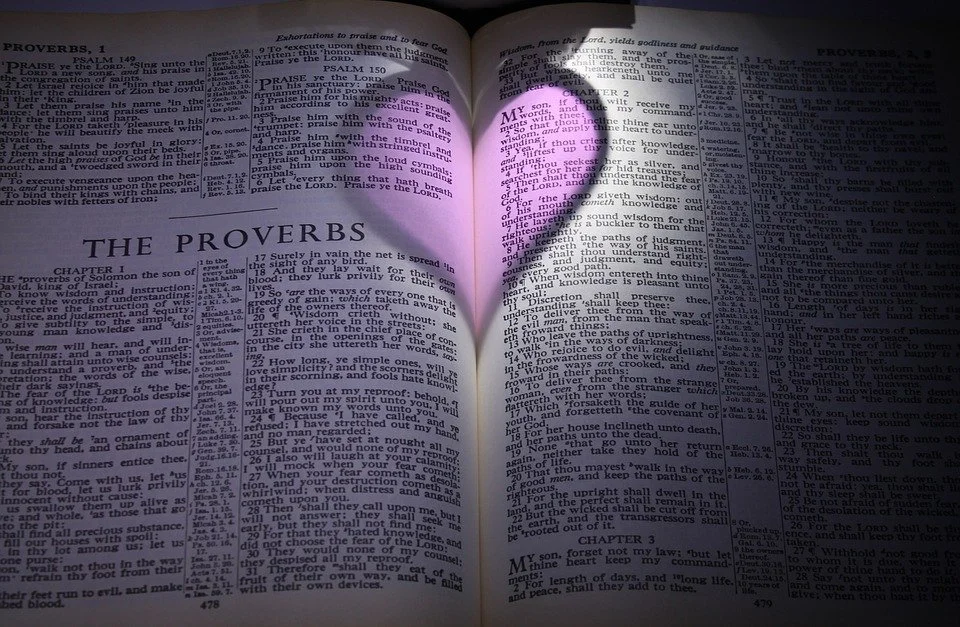
Proverbs have powered everyday life from time immemorial. These concentrated sayings carry the weight of experience, truth, and tested wisdom. For centuries, thoughtful leaders and careful observers of life have recognized their value. Thomas Jefferson once remarked, “Mankind would lose half its wisdom built up over the centuries if it lost its great sayings.” Theodore Roosevelt preferred what he called “the book of four centuries—the Book of Proverbs.” Woodrow Wilson admitted, “I use all the brains I have and borrow all I can from the classics and wise sayings.” If wise voices throughout history have leaned on proverbs, how much more should believers treasure the wisdom God Himself preserved in Scripture?
Why You Should Consider Collecting Powerful Proverbs — that’s our focus in this week’s Light Notes.
This Week: What exactly are proverbs, and how can they bring strength, clarity, and power to your everyday life?
Never Miss an Episode
Join believers who are growing in God’s Word every week. Subscribe to the Light on Life Podcast on your favorite platform:
Use this if your podcast app supports adding shows by RSS feed.
Light Notes:
What Is a Proverb?
A proverb is a condensed but memorable saying embodying some important fact of experience that is taken as true by many people.
It is usually a brief saying packed with wisdom.
In scripture, they are not just located in the book that bears its name.
Old Testament Proverbs
1 Samuel 10:12 (ESV) — 12 And a man of the place answered, “And who is their father?” Therefore it became a proverb, “Is Saul also among the prophets?”
1 Samuel 24:13 (ESV) — 13 As the proverb of the ancients says, ‘Out of the wicked comes wickedness.’ But my hand shall not be against you.
In certain places in scripture, the Lord turned the judgments that fell upon Israel as a result of their sinful idolatries into a proverb.
1 Kings 9:7 (ESV) — 7 then I will cut off Israel from the land that I have given them, and the house that I have consecrated for my name I will cast out of my sight, and Israel will become a proverb and a byword among all peoples.
The entire nation of Israel became a pithy saying in the negative sense.
In the saying that was uttered about Israel, you would see how unwise they were in lustfully yielding to their idols.
Proverbs and Bywords
Now take a look at the word ‘byword’ in the phrase, ‘Israel will become a proverb and a byword among all peoples.’
The English word byword means a proverbial saying or something that is frequently said, usually with a negative sense when applied to people.
The Hebrew noun rendered byword comes from a root meaning “to sharpen” and refers to a sharp taunt.[2. Donald Slager, “Preface,” in A Handbook on 1 & 2 Kings, ed. Paul Clarke et al., vol. 1–2, United Bible Societies’ Handbooks (New York: United Bible Societies, 2008), 305.]
So, a byword is ‘sharp’ negative saying.
The Temple itself also became a proverb and a byword among the nations.
2 Chronicles 7:20 (ESV) — 20 then I will pluck you up from my land that I have given you, and this house that I have consecrated for my name, I will cast out of my sight, and I will make it a proverb and a byword among all peoples.
So, the wisdom of God was packed into both positive and negative sayings that were repeated over and over again.
Solomon collected some of these sayings into the book that bears his name.
Solomon Had a Heart for Proverbs
Proverbs 22:17 (ESV) — 17 Incline your ear, and hear the words of the wise, and apply your heart to my knowledge,
Proverbs 24:23 (ESV) — 23 These also are sayings of the wise. Partiality in judging is not good.
He collected these sayings.
You should collect these sayings.
It’s evident that Solomon had a heart for wisdom.
1 Kings 4:32 (ESV) — 32 He also spoke 3,000 proverbs, and his songs were 1,005.
He asked the Lord for it one day.
1 Kings 3:5 (ESV) — 5 At Gibeon the LORD appeared to Solomon in a dream by night, and God said, “Ask what I shall give you.”
This was part of Solomon’s reply.
1 Kings 3:9–12 (ESV) — 9 Give your servant therefore an understanding mind to govern your people, that I may discern between good and evil, for who is able to govern this your great people?” 10 It pleased the Lord that Solomon had asked this. 11 And God said to him, “Because you have asked this, and have not asked for yourself long life or riches or the life of your enemies, but have asked for yourself understanding to discern what is right, 12 behold, I now do according to your word. Behold, I give you a wise and discerning mind, so that none like you has been before you and none like you shall arise after you.
New Testament Proverbs
Not only are there proverbs scattered throughout the Old Testament, but they also appear in the New.
Peter quotes one as did Jesus.
2 Peter 2:22 (ESV) — 22 What the true proverb says has happened to them: “The dog returns to its own vomit, and the sow, after washing herself, returns to wallow in the mire.”
Luke 4:23 (ESV) — 23 And he said to them, “Doubtless you will quote to me this proverb, ‘ “Physician, heal yourself.” What we have heard you did at Capernaum, do here in your hometown as well.’ ”
Modern Day Proverbs
Many modern-day proverbs are packed with the wisdom of God.
What makes them packed with wisdom is that they are based on Bible truth.
Earthly human wisdom means zero in the long run.
Find those sayings that have their foundations in God.
Here are just a few.
Two wrongs don’t make a right.
Look at First Corinthians six and especially note verse seven.
When in Rome do as the Romans.
Paul uttered this concept which was then turned into a proverb in 1 Corinthians 9:19–22.
No man is an island.
Again, this proverb is based on the word of the Lord to the church at Rome, see Romans 14:7–8.
People who live in glass houses shouldn’t throw stones.
How about Romans 2:21 for this pithy saying.
The early bird catches the worm.
Try Proverbs 6:6–9 for this wise saying.
Actions speak louder than words.
This proverb is based on James 1:22.
In next week’s post, we will continue to look at some powerful proverbs from the Book of Proverbs.
Call to Action: This week’s call to action is self-evident: consider collecting proverbs. When you read a book, or hear some wise saying, ask yourself why is that saying wise? If it’s real wisdom, the God-kind of wisdom that is, then it’s roots will be in the Word of God. Find the connection and once you do record these sayings in some type of note system so that you can recall them when you need them.
Question: What are some ways that you use to collect and collate wise sayings? Please leave your comments in the comments section below.
🎧 Suggested Episode
If you found this teaching on the call of God helpful, check out “How to Grow in Faith: Five Questions to Ask” — it builds on today’s lesson.
Listen Now →