
Why Bitterness Is Not Better in the Realm of the Emotions Ephesians 4:30–32
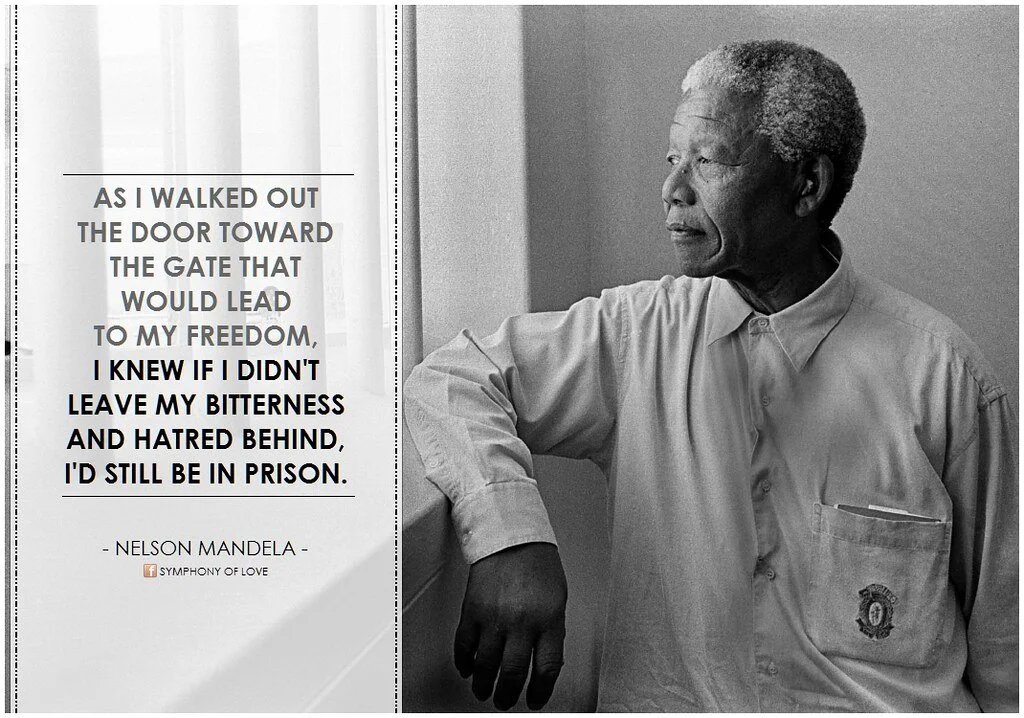
Bitterness feels small at first—just a harsh word, a painful memory, or an unresolved hurt—but if left alone, it grows into something toxic that poisons the soul. In today’s Light on Life Podcast, we finish Ephesians chapter four and explore Paul’s strong warning: “Let all bitterness be put away from you.” Through Scripture, real-life illustrations, and practical insight, we look at why bitterness is so destructive, how it damages relationships, and how God’s grace empowers you to walk in healing, tenderness, and forgiveness. Freedom is possible, and today’s teaching shows you the way forward. Why Bitter Is Not Better in the Realm of Emotions, that’s our focus on this week’s Light on Life.
This Week: Discover why bitterness is so destructive—and how God empowers you to uproot it and walk in tenderhearted forgiveness.
Listen to the Audio
#S9-041
Right Click to Download
Never Miss an Episode
Join believers who are growing in God’s Word every week. Subscribe to the Light on Life Podcast on your favorite platform:
Use this if your podcast app supports adding shows by RSS feed.
Read the Notes
You can view a primary transcript of this podcast at the bottom of this section.
Accept the Challenge
Each week's podcast contains a call to action. The Word of God will not produce in your life unless you put it into operation.This week's call is:
If bitterness exists in your life, uproot it with the prayer of forgiveness. Aks the Lord to forgive and you yourself forgive others.
Join the Conversation
Testimony is vital to a believer's life. We overcome by it (Rev. 12:11). Each week's podcast also contains a question designed to encourage testimony.This week's question is:
This week's question:
How has living a bitter-free life elevated your everyday circumstances? Please leave your story in the comments section below.
About Emery
Emery committed his life to the Lord Jesus Christ over 45 years ago and has served as both a full-time pastor and an itinerant minister. Both he and his wife Sharon of 40 years emphasize personal growth and development through the Word of God. The ministry of the Holy Spirit is their mission's focus and hallmark. Read more about them here.
🎧 Suggested Episode
If today’s study on stony ground in the heart helped you, check out “How to Break Up Your Fallow Ground” — it digs even deeper into preparing your heart to receive God’s Word.
Listen Now →Podcast Notes:
Bitterness: What the Bible Says
We are in the home stretch, as it were on Ephesians four.
We are down to the last two verses.
Let’s read them together.
Ephesians 4:30–32 (ESV) — 30 And do not grieve the Holy Spirit of God, by whom you were sealed for the day of redemption. 31 Let all bitterness and wrath and anger and clamor and slander be put away from you, along with all malice. 32 Be kind to one another, tenderhearted, forgiving one another, as God in Christ forgave you.
There is a saying in the culinary world that bitter is better.
The bitterer the herb, the better it is for your health.
Bitter foods moderate blood sugar and hunger.
Bitter foods challenge the liver. They make it work and help it to remain healthy, just as muscles challenged by exercise function better than ones that atrophy from underuse.[2. https://www.huffpost.com/entry/bitter-foods_b_5206909]
But bitter is not better in the world of emotions.
Paul says to the believers in Ephesus to put away bitterness.
Bitter is not better.
First, we must know what bitterness is, and with that thought, here is the Definition of the Day.
The Greek word ‘bitterness’ means animosity, anger, harshness, resentfulness, and extreme hostility.
Now keep reading the list that Paul gave us of things to put away.
Let all bitterness and wrath and anger and clamor and slander be put away from you, along with all malice.
Wrath here is a violent outbreak of anger.
It is anger that boils up and soon subsides again.
Can you see that inside bitterness could volcano out of our soul as anger?
The next word, clamor is a loud utterance, an outcry of passion.
What does that mean?
It means you’re bitter and angry, and you get loud about it.
All that leads to the next area of evil speaking.
While you’re bitter, angry, and getting loud about it, you start foaming at the mouth and add to that slanderous and injurious speech.
Here’s a translation of all these words put together.
All manner of harshness and violent outbreaks of wrath and anger and brawling and slanderous speech, let it be put away from you together with all manner of malice.[4. Kenneth S. Wuest, Wuest’s Word Studies from the Greek New Testament: For the English Reader, vol. 4 (Grand Rapids: Eerdmans, 1997), 117.]
Bitter is not better.
And with that thought, here is the Quote of the Day.
Bitterness is like drinking poison and waiting for the other person to die.[3. Ron McManus, Springfield, Missouri Craig Brian Larson and Phyllis Ten Elshof, 1001 Illustrations That Connect (Grand Rapids, MI: Zondervan Publishing House, 2008), 504.]
What Causes Bitterness?
Some people say that what causes bitterness is adversity in life.
In some situations, precious people were abused as children by a family member, and they are bitter about it — explosively angry about it.
A loved one may have passed away, someone incredibly special to you, and it bothers you to no end that person died.
It troubles you that you prayed and asked the Lord to heal that person, and yet they didn’t make it.
So, you're mad at God and the world.
Job experienced something on this level.
You know what happened to him; he lost his children, his possessions vanished like a snowball in the hot August sun, and, to top it, Job was afflicted with a horrible disease.
All of this took place in a short space of time.
What was Job’s response?
Job 10:1 (ESV) — 1 “I loathe my life; I will give free utterance to my complaint; I will speak in the bitterness of my soul.
But adverse circumstances are not what caused Job’s bitterness, and it’s not what causes yours.
What causes bitterness is our response to adverse circumstances.
Those responses either produce peace or anger.
And with that thought, here is the Illustration of the Day.
James Bain went to prison in 1974, when he was 19 years old. Authorities released him just before Christmas in 2009, as a 54-year-old man. James served 35 years of a life sentence given to him when the state of Florida convicted him of kidnapping and raping a 9-year-old boy. He wasn’t pardoned or paroled. DNA testing proved him innocent, which means that James spent 35 years in prison for a crime he didn’t commit. Released on the order of a judge, James “made his first-ever cell phone call to tell his 77-year-old mother he’d been released. ‘I’m not angry,’ he said. ‘Because I’ve got God.’ ” James chose faith in God over bitterness.[4. Jim L. Wilson and Rodger Russell133133 Mitch Stacy, “Free after 35 years: DNA clears Florida inmate,” http://www.boston.com/news/nation/articles/2009/12/18/free_after_35_years_dna_clears_florida_inmate/. Jim L. Wilson and Rodger Russell, “No Bitterness after 35 Years in Prison,” in 300 Illustrations for Preachers, ed. Elliot Ritzema (Bellingham, WA: Lexham Press, 2015).]
Can you see from this illustration that bitterness is a choice?
The choices you make amid adversity make all the difference.
So, it’s never adversity but our response to it.
You can be mad or glad; it’s your choice.
After the Civil War, in an incident recounted by Charles Flood in Lee: The Last Years, Robert E. Lee visited a woman who took him to the remains of a grand old tree in front of her home. There she cried bitterly that its limbs and trunk had been destroyed by Union artillery fire. She waited for Lee to condemn the North or at least sympathize with her loss. But Lee—who knew the horrors of war and had suffered the pain of defeat—said, “Cut it down, my dear madam, and then forget it”.
Cut it down and forget it — now that’s a great thought.
You can cut the adversity down, forget it, forgive it, and move on.
In the late 1990s, Pete Peterson was appointed U.S. ambassador to Vietnam. Peterson had served six years as a prisoner of war in the dreaded “Hanoi Hilton” prison camp. When asked how he could return to the land where he’d endured years of starvation, brutality, and torture, he replied, “I’m not angry. I left that at the gates of the prison when I walked out in 1972. I just left it behind me and decided to move forward with my life.” When you’re tempted to get even with those who hurt you, remember that you can’t go back, you can’t stay where you are, but by God’s grace, you can move forward one step at a time.[5. Citation: Ray Pritchard, Something New Under the Sun PreachingToday.com, More Perfect Illustrations: For Every Topic and Occasion (Wheaton, IL: Tyndale House Publishers, Inc., 2003), 21.]
In each of these stories, you see common elements.
Bad stuff happened to good people.
Unfair stuff happens to great people.
But in each case, a singular choice was made not to give in to the natural human emotions that adversity pulls on.
Instead, a decision was made to forgive.
An alternative was selected.
Move on.
Don’t erect a monument to adversity.
You know, in the Old Testament, memorials were built to help people remember God’s great dealings with His people.
Joshua 4:1–7 (ESV) — 1 When all the nation had finished passing over the Jordan, the Lord said to Joshua, 2 “Take twelve men from the people, from each tribe a man, 3 and command them, saying, ‘Take twelve stones from here out of the midst of the Jordan, from the very place where the priests’ feet stood firmly, and bring them over with you and lay them down in the place where you lodge tonight.’ ” 4 Then Joshua called the twelve men from the people of Israel, whom he had appointed, a man from each tribe. 5 And Joshua said to them, “Pass on before the ark of the Lord your God into the midst of the Jordan, and take up each of you a stone upon his shoulder, according to the number of the tribes of the people of Israel, 6 that this may be a sign among you. When your children ask in time to come, ‘What do those stones mean to you?’ 7 then you shall tell them that the waters of the Jordan were cut off before the ark of the covenant of the Lord. When it passed over the Jordan, the waters of the Jordan were cut off. So these stones shall be to the people of Israel a memorial forever.”
The Lord instructed His people to make a memorial, a pile of stones that would remind generations of His people of God’s dealings.
It would be a place they would go back to and revisit.
It was a reminder of all He had done and a reminder that if He did it once, He could and would do it again.
This was a positive memorial — a righteous thing — an uplifting thing.
What we have inadvertently done in the flesh is erect a memorial — a pile of stones — a place that we go back and revisit.
We revisit that place in the bitterness of our souls.
We regurgitate all the bad stuff, all the unfair stuff that happened to us.
Now, we don’t realize what we’ve done— but we built a memorial to the works of the enemy in our life.
Then, we go back and religiously visit these places in our mind.
We rehash it repeatedly.
Don’t keep visiting the grave site where your innocence was buried.
Refuse to go back and visit that headstone.
Quit rereading and rehashing all the stuff that happened to you.
Don’t put flowers on the grave of your tragedy.
Instead, cut the tree down, and mow the rocks over.
Make a choice to forgive.
Walking in love is a choice.
Bitter is not better.
You’re not doing yourself any favors, and you’re not helping yourself and anyone else in your life by holding on to past hurts.
One day, and it’s recorded in John eleven, Jesus raised Lazarus from the dead.
When he came forth bound in grave clothes, Jesus told the disciples to loose him and let him go.
But that was a righteous thing to restore a man to his family.
That was God thing - a miraculous move — something to be celebrated.
But, in the arena of bitterness, we need to do the opposite.
Quit resurrecting the works of the devil; quit trying to raise up the old pain.
Don’t loose it — don’t let it go.
Leave it buried under the power of the love of God.
Bitterness and Ruth
Ruth 1:1–5 (ESV) — 1 In the days when the judges ruled there was a famine in the land, and a man of Bethlehem in Judah went to sojourn in the country of Moab, he and his wife and his two sons. 2 The name of the man was Elimelech and the name of his wife Naomi, and the names of his two sons were Mahlon and Chilion. They were Ephrathites from Bethlehem in Judah. They went into the country of Moab and remained there. 3 But Elimelech, the husband of Naomi, died, and she was left with her two sons. 4 These took Moabite wives; the name of the one was Orpah and the name of the other Ruth. They lived there about ten years, 5 and both Mahlon and Chilion died, so that the woman was left without her two sons and her husband.
So, here is a woman who lost her husband and her two sons.
She is so alone.
What was her response?
Ruth 1:20–21 (ESV) — 20 She said to them, “Do not call me Naomi; call me Mara, for the Almighty has dealt very bitterly with me. 21 I went away full, and the Lord has brought me back empty. Why call me Naomi, when the Lord has testified against me and the Almighty has brought calamity upon me?”
The name Naomi means pleasant and, no doubt, that’s who Naomi was as a person — a pleasant God-fearing soul.
But, when these tragedies occurred in her life, the loss of her husband, and the loss of her sons, she changed her name to Mara.
The name Mara means bitter.
Do you see what she did?
She changed her name to match her tragedy.
She identified with her tragedy to such a degree that she changed her name so that every time anybody would call her name, she would be reminded of what happened to her.
Naomi built a perpetual memorial to her pain.
She schooled herself in bitterness and pain instead of faith and righteousness.
This is something that she did of her own accord; a decision she made — a choice she undertook.
This is completely opposite of what happened to Abraham.
The Lord led Abraham to change his name.
His name by birth was Abram.
God changed it to Abraham.
The Lord did that — Abraham didn’t do it on his own.
The name Abram means ‘high father.’
The name Abraham means ‘father of a multitude.’
God schooled Abraham by changing his name so that every time any individual would call his name, he would hear God’s promise in his ears.
Genesis 17:4–5 (ESV) — 4 “Behold, my covenant is with you, and you shall be the father of a multitude of nations. 5 No longer shall your name be called Abram, but your name shall be Abraham, for I have made you the father of a multitude of nations.
Abundant, prosperous, – all over the place, sand of the sea in multitude.
Genesis 15:5–6 (ESV) — 5 And he brought him outside and said, “Look toward heaven, and number the stars, if you are able to number them.” Then he said to him, “So shall your offspring be.” 6 And he believed the Lord, and he counted it to him as righteousness.
How about the stars of the sky in number?
That’s what the name changing to Abram was about.
Now compare this to what Naomi did.
She blamed God.
But God is innocent.
He’s not out killing husbands and children.
God’s not your problem — He’s your answer.
Naomi changed her name on her own.
The Lord did not lead her to do that.
Naomi was in a state of bitterness.
Why?
Well, she lost everyone she loved.
Why?
She was in a state of aloneness.
Why?
Naomi was bereft of financial support; after all, the men in her life were the providers for her life.
Why was she bitter?
In losing her sons, she felt she lost her lineage.
Now, she feels that God is totally against her.
But all of this was her choice.
All of this was her reaction to adversity.
Her bad theology was at the root core of this problem.
Job had the same problem.
Job 27:1–2 (ESV) — 1 And Job again took up his discourse, and said: 2 “As God lives, who has taken away my right, and the Almighty, who has made my soul bitter,
Bitterness Is to Be Avoided
Now, we have this reference in Ephesians 4:31, that we have been looking at today but, this admonition is in more than one place.
Hebrews 12:15 (ESV) — 15 See to it that no one fails to obtain the grace of God; that no “root of bitterness” springs up and causes trouble, and by it many become defiled;
So, bitterness is to be avoided at all costs.
The Greek word translated ‘see to it’ — See to it that no one fails to obtain the grace of God; ‘see to it that no root of bitterness' springs up — that word means to watch carefully, to be vigilant, to be on the lookout or be careful.
It’s the same word ‘oversight’ in 1 Peter five.
1 Peter 5:2 (ESV) — 2 shepherd the flock of God that is among you, exercising oversight, not under compulsion, but willingly, as God would have you; not for shameful gain, but eagerly;
Instead of overseeing the flock, you need to oversee yourself in this area, so that no root of bitterness springs up in you.
Bitterness wants to pop up.
You are not dead — you have feelings, you have emotions, you have memories, so you must be on guard and treat bitterness like weed in your garden.
When it pops up, pull it up.
Bitterness acts like a weed.
When it appears, spray it — kill it — uproot it.
It’s going to want to keep popping up and coming back.
Hebrews twelve tells us that if you don’t stay vigilant, problems arise.
See to it that no one fails to obtain the grace of God; that no “root of bitterness” springs up and causes trouble, and by it many become defiled;
Bitterness causes two things to happen — it causes trouble, and it causes others to become defiled.
Why does your bitterness affect others?
The reason is that you are parroting the story.
Others are hearing and looking at God the wrong way.
The poisonous theology you are spreading becomes a sickness in others.
The infection you have in your soul contagiously attaches itself to the souls of others.
People who love you want to take sides with you.
Be careful what you say — be cautious about what you spread.
Bitterness defiles the person who won’t let it go, and it defiles those who hear it.
Here is yet another place where bitterness is spoken against in scripture.
James 3:13–16 (ESV) — 13 Who is wise and understanding among you? By his good conduct let him show his works in the meekness of wisdom. 14 But if you have bitter jealousy and selfish ambition in your hearts, do not boast and be false to the truth. 15 This is not the wisdom that comes down from above, but is earthly, unspiritual, demonic. 16 For where jealousy and selfish ambition exist, there will be disorder and every vile practice.
So here, James references a fit of jealousy that is soaked in bitterness.
This person has gone to the next stage.
The bitterness they have has spread to jealousy.
You don’t have something the other guy has, and so you are bitter about it.
You feel mistreated.
Where this stuff exists, there is disorder and every vile practice.
Bitter is not better — it’s flat-out bad.
How to Overcome Bitterness
So, now that we understand that bitterness is a nasty thing, how do we get out of it?
The answer is in the next, and last verse in Ephesians four.
Ephesians 4:31–32 (ESV) — 31 Let all bitterness and wrath and anger and clamor and slander be put away from you, along with all malice. 32 Be kind to one another, tenderhearted, forgiving one another, as God in Christ forgave you.
Instead of being bitter, be kind.
In place of being bitter, be tenderhearted.
Instead of being bitter, forgive one another as God in Christ has forgiven you.
Kind, tenderhearted, forgiving, that’s the land of love.
This your land, the believer's land.
A land we should settle down and remain in.
The love-land is a better land, and you will find that when you enter this land and make it your possession, life is so much better.
Now Father God, in the precious Name of Jesus, we come to you, right now and we ask you to forgive us if we have allowed a root of bitterness in our lives. We repent of it right now and ask you to cleanse us. Help us by your Holy Spirit to deal with our emotions. We reach out to you right now. We lift our hands and our hearts to you. We know this is bad. Help us to overcome it - heal our minds by the renewing of your Word. Thank you today for helping even supernaturally purging our souls of this infectious and dangerous area. We thank you for your grace and your mercy in Jesus Name Amen.
We hope you have a great God-week this week in Jesus' Name, Amen.
🎧 Suggested Episode
If you found this teaching on the call of God helpful, check out “How to Grow in Faith: Five Questions to Ask” — it builds on today’s lesson.
Listen Now →